
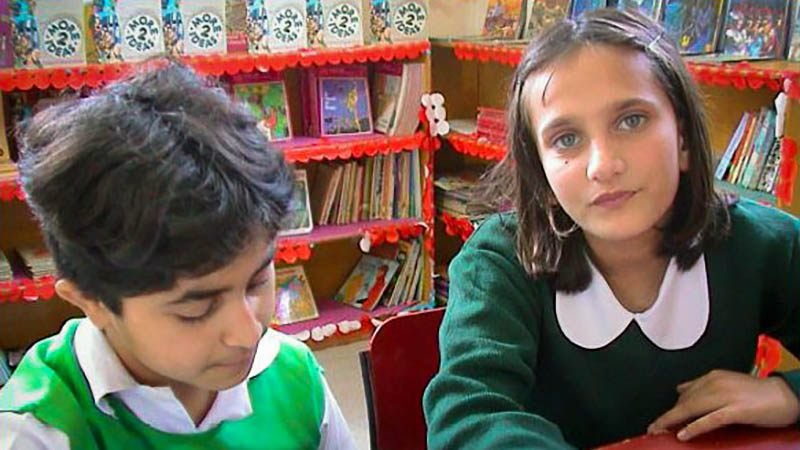
Pakistan is a country of many languages. Many children speak a regional language at home, learn Urdu, the national language, at school, and meet English in textbooks, examinations and public life. For young people from rural communities, confident English can open doors that would otherwise stay closed.
Languages and policy
Article 251 of Pakistan’s Constitution makes Urdu the national language and provides for its use for official purposes, with English used in the meantime. In September 2015, the Supreme Court of Pakistan ordered the government to implement Article 251. Some commentators saw the ruling as a sign that English would receive less emphasis in public education. English nevertheless remains widely used in higher education, the professions and international work.
Why English opens doors
Further study. Many university courses, scholarships, exchange programmes and internships expect applications and coursework in English. A student who writes well in English can apply for a far wider range of opportunities.
Learning beyond the classroom. A large share of online courses, books and research is published in English. Students who read it with confidence can keep learning on their own, in subjects their school may not offer, and bring practical knowledge back to their communities.

Pupils listen on headphones as they work at Banjosa Valley Public School.
Learning to use a language, not just repeat it
A language learned only by memorising words and phrases is hard to use. Pupils need to read widely, speak and write regularly, and practise in real situations.
That is the approach KEF’s schools and college take. The Joan Atkinson College of Teacher Education aims to strengthen trainee teachers’ spoken and written English, so they can use it confidently as a medium of teaching and learning. Pearl Valley Public School’s library holds more than 15,000 books, and Pearl Valley alumni have gone on to universities including LUMS, NUST and Bahria.
When our patron, Sir David Green, visited KEF’s schools in November 2018, he wrote that he was struck by the pupils’ “level of confidence generally and their proficiency in English”. Read Sir David’s account of his visit.
How you can help
Quest for Education (now Quest for Education Foundation) raises funds in the UK for the schools and the college run by our partner, the Kashmir Education Foundation (KEF). Your gift helps pay for good teaching, books and libraries that give children the language skills to reach further.